A perfect way to finish a wine competition - with a deep dive into Albariño
Is Albariño poised to become the next big thing in Aotearoa New Zealand?
“It’s tempting to plant a lot of it, but I’m suggesting caution, even though it does well all along the east coast of New Zealand. It’s such a good variety for our climate conditions,” says Marlborough winemaker Simon Waghorn, co-founder and co-owner of Astrolabe Wines with his partner, Jane.
We - a group of wine judges, associate judges, winemakers and writers - were listening to his wise words of caution while he led us through a tasting of Albariño on Friday last week. Waghorn is a dab hand with aromatic white winemaking in Marlborough New Zealand, where he and his family own Astrolabe Wines. He's a fan of the Albariño grape variety and the wines it makes and he's all about championing diversity - he is one of the few in New Zealand's largest wine region to make everything from Albariño, Chenin Blanc and Riesling to all the usual suspects of Chardonnay, Pinots Gris and Noir, along with, of course, Sauvignon Blanc.
So, why the caution? While he's a devoted champion of diversity, Waghorn is also a devotee of sticking to what we do best and at this time that happens to be Sauvignon Blanc. But we were there to taste Albariño and it was a fascinating snapshot of the grape variety, the region it comes from and a diverse range of wines made from it.
There are 65 hectares of Albariño planted in New Zealand today, compared to 30,747 hectares of Sauvignon Blanc and - for the sake of comparison with another white grape that does exceptionally well in this country - a paltry (and rather depressing) 22 hectares of Chenin Blanc. That's another story but given the outstanding potential of Chenin Blanc and the lack of commitment to it, Albariño could easily be seen as a faddish newcomer.
Albariño's traditional homeland is widely considered to be Galicia in north west Spain, in particular, Rías Baixas, which is home to 4,848 hectares spread over five non-contiguous sub zones: Val do Salnes, Condado do Tea, O Rosal, Soutomaior and Ribeira do Ulla. The overarching theme of climate that connects these areas is high rainfall but otherwise they vary in terms of warmth, proximity to the ocean and maritime influence. The vast majority (approximately 80%) of the vineyards in Rias Baixas are small (approximately four hectares) and generally farmed by non professional winemakers. The area also has less pronounced diurnal variation (day-night temperature variation) than New Zealand, due to its warm-ish maritime position.
Business as usual winemaking in Rias Baixas
If you had to explain the business as usual winemaking practices, the grapes would typically be hand picked, destemmed, lightly crushed, given a portion of skin contact, fermented on some solids at a relatively cool temperature with some extended lees ageing; often in a combination of vessels ranging from acacia, concrete tanks and stainless steel to oak, says Waghorn.
Albariño in Aotearoa
"For us in New Zealand, we're looking for new things to do and Albariño was one of those appealing varieties with aromatic fruit, scarcity value, thick skins, high phenolics and malic acid (which can make it challenging to work with) but a wide range of appeal - from citrus, floral and spice to gingery aromas," says Waghorn.
"Albariño sits somewhere between Sauvignon, Riesling and Pinot Gris in taste."
The tasting led by Waghorn was intended to offer a snapshot of Albariño and it was an excellent dive into a range of wines with four Spanish Albariños and two from New Zealand; from Hawke's Bay and Marlborough.
Here are the wines we tasted with my ratings next to each. We did not rate these wines as a group as this tasting took place following three days of judging wine for the 2026 New World Wine Awards, held this year in Marlborough, New Zealand.
A taste of Albariño
2025 Smith & Sheth CRU Albariño RRP $32
Hand picked, destemmed and pressed lightly to manage the naturally high phenolics of the Albariño grape. Fragrant floral character and firm phenolic mid palate grip are captured in a dry style with fresh salinity, pronounced citrus flavours and a long fresh finish. Oak influenced with some new oak and some malolactic fermentation. 14.3% abv. 17.5/20
Distributed in New Zealand by Negociants.
2024 Gran Vinum Selección Especial Albarino RRP $40-ish
From a 50 year old vineyard, 10 metres above sea level, this wine is made from hand harvested grapes which were gently pressed to retain aromatic free run juice and fermented in stainless steel at low temperatures. The wine was aged on lees for five months. Pronounced aromas of chamomile, orange blossom and almonds lead into a juicy lemon pith textured wine with a dry finish. 18.5/20
Imported to New Zealand and distributed by Caro's.
2023 Quinta de Couseto Barbuntin Albarino RRP $45
This wine comes from the O Rosal sub region, which borders Portugal and is the southernmost area in the Rias Baixas DO. This is an estate built in 1853 by monks. The wine is noticeably lees-influenced with ripe yellow fruit aromas of peach, marmalade and ripe citrus. 17.5/20
Imported and distributed by Cahn's.
2023 Granbazan Contrapunto Albarino RRP $38.99
Fresh, clean and classic style with delicate floral aromas, this wine is made from destemmed grapes followed by a short maceration and bottled three months after fermentation. It's a fresh, pared back style that showcases the characters of the varietal in that area. 12.5% abv. 17.5/20
Imported and distributed by Hancocks.
2023 Astrolabe Kekerengu Coast Albarino RRP $34.99
Tiny amounts of Astrolabe's Kekerengu Albarino are made each year from a 0.7 hectare vineyard at Kekerengu, about an hour's drive south of Blenheim, at the south end of Marlborough. This is a dry style with a wide aromatic spectrum in the 2023 vintage - from lemon, lime and floral aromas to a smooth lightly creamy mouthfeel on the mid palate, which comes from malolactic influence. The grapes in this wine were hand picked, whole cluster pressed, aged in older puncheons. No new wood was used. It's 11.7% abv and dry (1.8 grams rs). 18.5/20
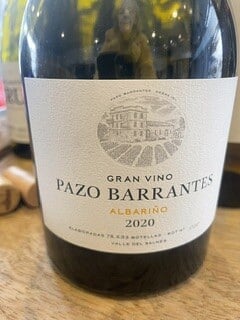
2020 Pazo Barrantes Gran Vino Albarino RRP $74.99
This was the clear stand out (for me) of the tasting with its complex range of aromas captured in a silky textured, smooth and complex dry white. The grapes were aged in a combination of stainless steel tanks, acacia wood barrels and in bottle. Rich, nutty, salty and succulent, it has aromas of pineapple and yellow fruit aromatic spectrum and beautifully balanced fruit phenolics; like lemon pith with a silkiness. 13.5% abv. 19/20
Imported and distributed by Hancocks.
Prices quoted are approximate and may vary.